
Abstract
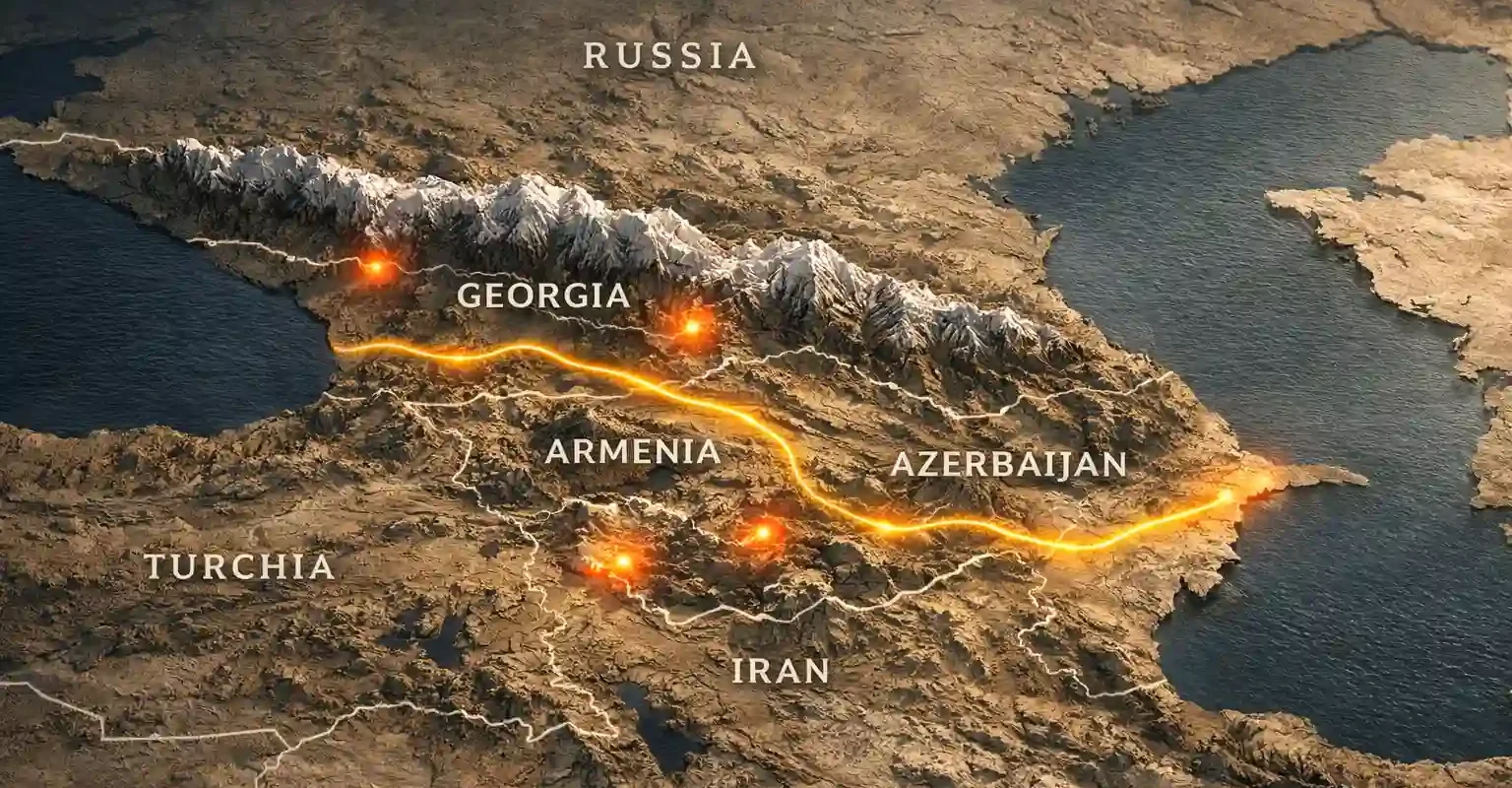
Questo report analizza il Caucaso meridionale come spazio di frontiera, come “corridoio” tra Europa e Asia e come area ad alta fragilità politica. Dopo aver delineato l’importanza geografica e strategica della regione, l’analisi si concentra sulla ricostruzione dei profili politico-economici di Armenia, Azerbaijan e Georgia, evidenziando quanto risorse energetiche, vulnerabilità interne e scelte di politica estera condizionino in modo diverso la loro capacità di autonomia decisionale. Un focus importante è dedicato al ruolo delle potenze esogene – Russia, Turchia e Iran – e alle modalità con cui questi attori influenzano con strumenti militari, economici e infrastrutturali le politiche regionali, ridefinendo equilibri e margini di manovra dei Paesi.
Il lavoro approfondisce la “geografia dei confini”, interpretando le frontiere non solo come linee di demarcazione geografica e giuridica ma come dispositivi politici: si analizzano conflitti e contese territoriali e le pratiche di pressione lungo le linee di contatto. Il report mette in luce infine l’interesse geo-economico europeo ed italiano, soprattutto in relazione alla sicurezza energetica e alle rotte di transito (TANAP e TAP), valutandone opportunità, rischi e implicazioni strategiche per la stabilità della regione.
Abstract
This report analyzes the South Caucasus as a border space, as a “corridor” between Europe and Asia, and as an area of high political fragility. After outlining the geographical and strategic importance of the region, the analysis focuses on reconstructing the political-economic profiles of Armenia, Azerbaijan, and Georgia, highlighting how energy resources, internal vulnerabilities, and foreign policy choices condition, in different ways, their capacity for decision-making autonomy. An important focus is devoted to the role of exogenous powers—Russia, Turkey, and Iran—and to the ways in which these actors influence regional policies through military, economic, and infrastructural instruments, redefining balances and the countries’ margins of maneuver.
The work goes into depth on the “geography of borders,” interpreting frontiers not only as lines of geographical and legal demarcation but as political devices: conflicts and territorial disputes are analyzed, as well as practices of pressure along lines of contact. Finally, the report highlights European and Italian geo-economic interest, especially in relation to energy security and transit routes (TANAP and TAP), evaluating their opportunities, risks, and strategic implications for the stability of the region.